In life sciences, “brand” is still too often misunderstood. For some, it’s visual identity, for others, it’s marketing communications, and for many scientists and senior leaders, it can feel intangible. We’ve often heard it described as “the fluffy stuff.”
But the reality is very different. Brand is not decoration, it is direction. When a brand is considered strategically, it becomes one of the most powerful drivers of growth, reputation, internal culture and organisation value.
If we could impart five key things about brand for life sciences organisations, it would be these:
1. Branding is intrinsically linked to the success of an organisation
In biotech, pharma and wider healthcare, value is built on more than just the strength of the business’s pipeline. Investors back organisations they understand, and businesses collaborate with organisations they trust.
Developing a well-defined brand strategy helps to define the organisation’s purpose, how they differentiate themselves and what its long-term goals are.
When done properly, brand reduces perceived risk, which in turn increases value.
2. A strong brand drives impact internally and externally
Life sciences organisations operate in complex ecosystems. The science is nuanced, the data is dense, and the regulatory landscape is unforgiving.
A strong healthcare brand strategy drives real-world impact and cultural transformation – not just for external audiences, but for employee advocacy too.
Externally, this leads to sharper competitive positioning, a stronger share of voice and more compelling investor narratives.
Internally, it delivers something just as powerful. When a brand is anchored in purpose and ambition, it creates alignment across leadership, research, commercial and operational teams. People understand not just what they are doing, but why it matters.
In short, the brand becomes a unifying force that connects pioneering science to organisational behaviour.
3. Internal brand alignment is as critical as external messaging
One of the most common misunderstandings in life sciences organisations is the belief that brand is something projected outward. In reality, external reputation is the result of internal clarity.
If the message from the leadership at the top differs from employee experience, it will weaken your credibility. And likewise, if commercial ambition conflicts with your stated purpose, it will erode the trust investors, consumers and employees have in your organisation. In highly scrutinised sectors like life sciences, we often find that this inconsistency is amplified.
External reputation isn’t created by brand. It’s the result of internal clarity and alignment.
4. Brand is measurable, and its influence is long-lasting
While brand does not operate like short-term performance marketing, its effects are tangible and cumulative.
In life sciences, brand helps turn complex science into clarity – making research, ambition and impact understandable to the audiences that matter.
In industries defined by long development cycles and extended time-to-market, brand helps sustain belief in the science while progress unfolds.
5. The role of brand in building trust is more important than ever
The life sciences industry operates under intense scrutiny. Healthcare professionals face information overload, regulators demand transparency and rigour, public trust can be fragile, and investors are increasingly selective.
As we’ve touched upon, trust is not built through volume of messaging or product claims. It is built through clarity, consistency and values-led communication.
A clearly defined life sciences brand articulates purpose beyond products, demonstrates commitment to patients and partners, and strengthens credibility and share of voice with key stakeholders. In fact, a clearly defined brand strategy reduces friction across every interaction, from funding conversations to regulatory engagement.
And in high-stakes environments, reduced friction accelerates progress.
Brand is not a marketing exercise. It is a board-level responsibility.
For too long, brand in life sciences has been dismissed as ‘cosmetic’, an exercise that is secondary to science, operations or commercial strategy.
But the most successful biotech, pharma and healthcare organisations understand that brand clarifies ambition, aligns leadership, builds trust, and strengthens enterprise value.
It is not fluff. It is how pioneering scientific work becomes understood, supported and sustained.
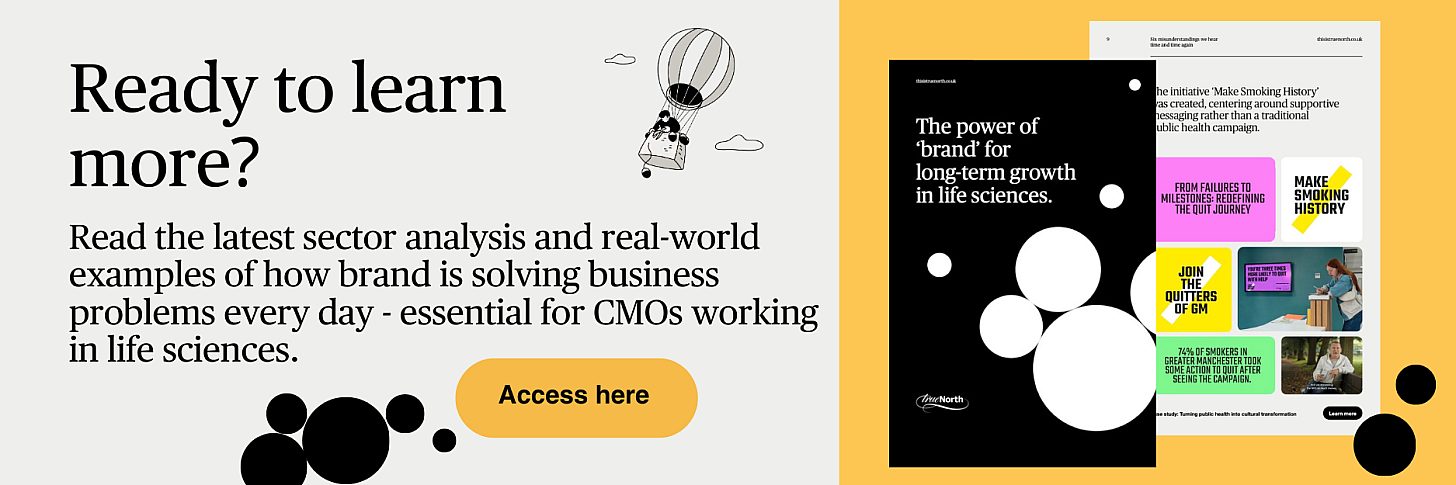
To read our full guide on the common misconceptions of the purpose of brand, click here, or if you’d like to talk to us about building a brand, please contact us here.
Ady Bibby
Date
March 2026