Healthcare’s biggest shift right now isn’t a breakthrough. It’s a change of environment.
The NHS 10-Year Health Plan sets out a deliberate move from hospital to community. Diagnostics, rehabilitation, mental health support and long-term condition management are being brought into neighbourhood health centres, pharmacies and even our homes.
Hospital by default is giving way to a principle that care should happen as locally as it can.
But this has real consequences for health science organisations that have, until now, done their most important work behind the curtain.
Where you are seen changes who sees you
For decades, many life science, diagnostics and medtech companies have built their reputations in a closed loop: earning credibility among clinicians, procurement teams, researchers, regulators and investors. An expert audience who judge a brand on evidence, data and peer endorsement.
Care that moves into the community moves into the public’s line of sight: the test kit brand in the pharmacy, the monitoring device in a living room, the app that manages a long-term condition.
When care changes environment, brands need to expand.
We’ve seen this happen before, at speed
Before 2020, AstraZeneca was a name well known in boardrooms, laboratories and the FTSE, but rarely discussed around the dinner table. Within months, it was part of everyday conversation. People booked vaccines by the name and compared brands with their neighbours. A science organisation became a public brand almost overnight.
That visibility brought real goodwill. It also brought public scrutiny the company had not spent years preparing for. Safety questions, supply disputes and fast-moving headlines were all filtered through people who had no prior relationship with the brand. The science was not the only thing being judged. People also judged whether they felt they understood the organisation, and importantly, whether AstraZeneca understood them.
Public prominence can sometimes arrive faster than public relationships can be built.
Fame is not the same as belief
Awareness is the easy part. A community setting will make a health science brand visible.
Belief is harder. Would a parent trust this brand for their child’s care? Would a patient recommend it to a friend?
The brands that connect in the community are not necessarily the most familiar. They are the ones people feel confident in and convinced by, enough to advocate for them. That kind of belief is built before it is needed, and it is very hard to manufacture during a crisis.
A new audience asks different questions
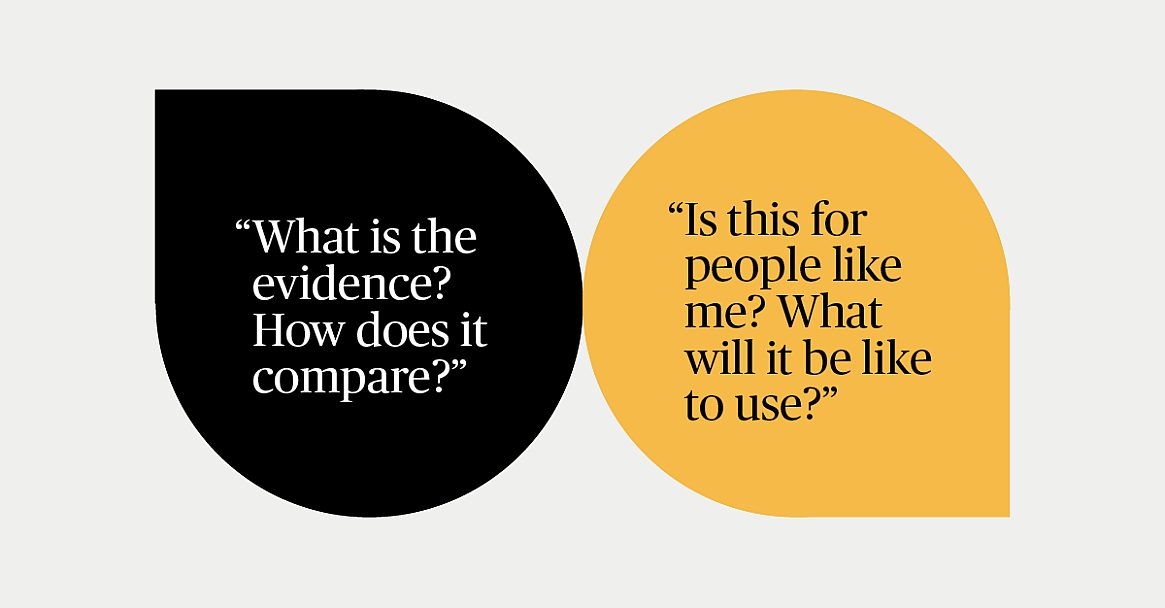
Expert audiences ask: What is the evidence? How does it compare?
The public asks something closer to: Is this for people like me? What will it be like to use?
Both sets of questions are rational. The second set, however, is rarely answered by a clinical dossier. Science brands that are fluent in the first language now need to become fluent in the second without losing the rigour that earned their credibility in the first place.
What community relevance asks of a science brand
From our work with organisations at this intersection, including LifeArc, Our Future Health, Genomics England and SpringerHealth+, a few observations stand out.
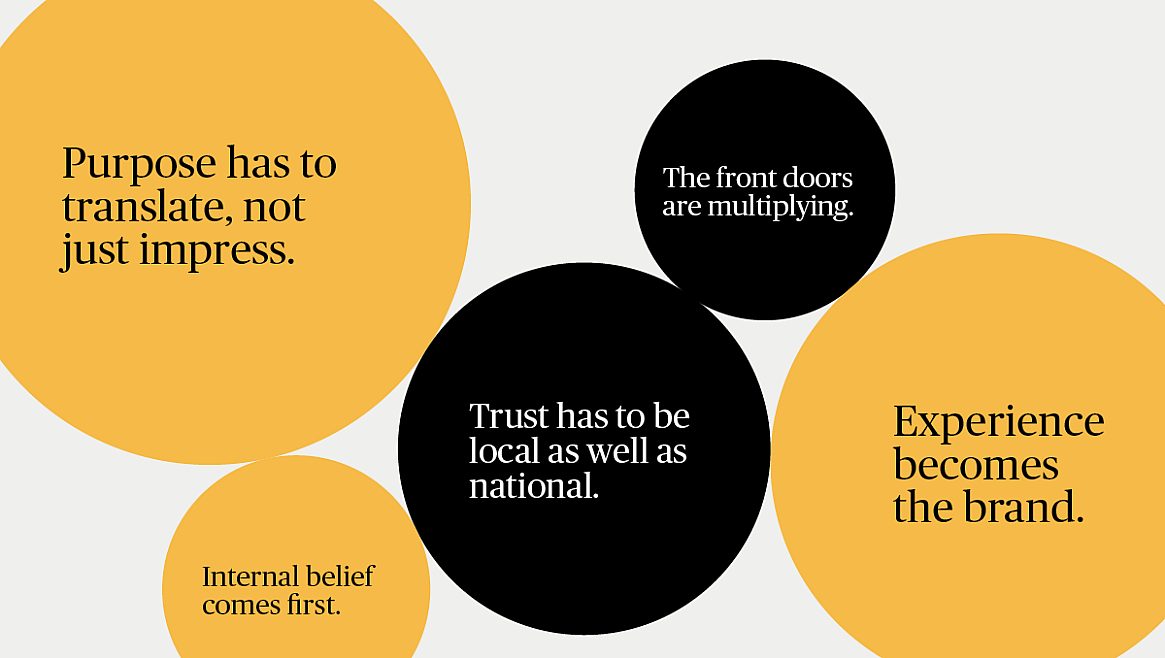
Purpose has to translate, not just impress. A mission written for investors and scientists often means little on a high street. The task is not to simplify the science. It is to articulate why it matters in someone’s life.
The front doors are multiplying. A brand’s first impression may now come from a pharmacist, a community nurse, a GP receptionist or a carer. These intermediaries become ambassadors, and they need a story they can repeat with confidence.
Experience becomes the brand. In community care, the packaging, the instructions, the app onboarding and the follow-up message carry weight. For many people, these moments are the brand.
Trust has to be local as well as national. Community health is shaped by place, culture and inequality. A single national voice will not land the same way in every neighbourhood. Listening, partnership and representation become important brand behaviours.
Internal belief comes first. Teams that have spent years speaking to specialists need to believe in, and feel equipped for, a public-facing role. If the people inside the organisation are uncertain about who they are now serving, the public will notice.
The brands that move first
The relocation of care is a policy direction, but it is also a brand moment. Health science organisations can wait to be discovered in community settings and respond to whatever reputation forms, or they can decide now what they want to mean to the public and start earning that belief.
The science will still matter most. But in the neighbourhood, the brands that thrive will be the ones whose science people understand, trust and choose.
We’re sharing what we’re learning and keen to compare notes. If you lead brand or marketing in health sciences, how are you preparing for the public role for your brand?
Jen Yeardley
Date
November 2026